



Xavi takes charge of the Oranje until 2030: The inheritance of Cruyff's bloodline and the philosophy of employing foreign coaches in football powerhouses

13/08/2026 09:00:44 VictoryVox
 0
0  0
0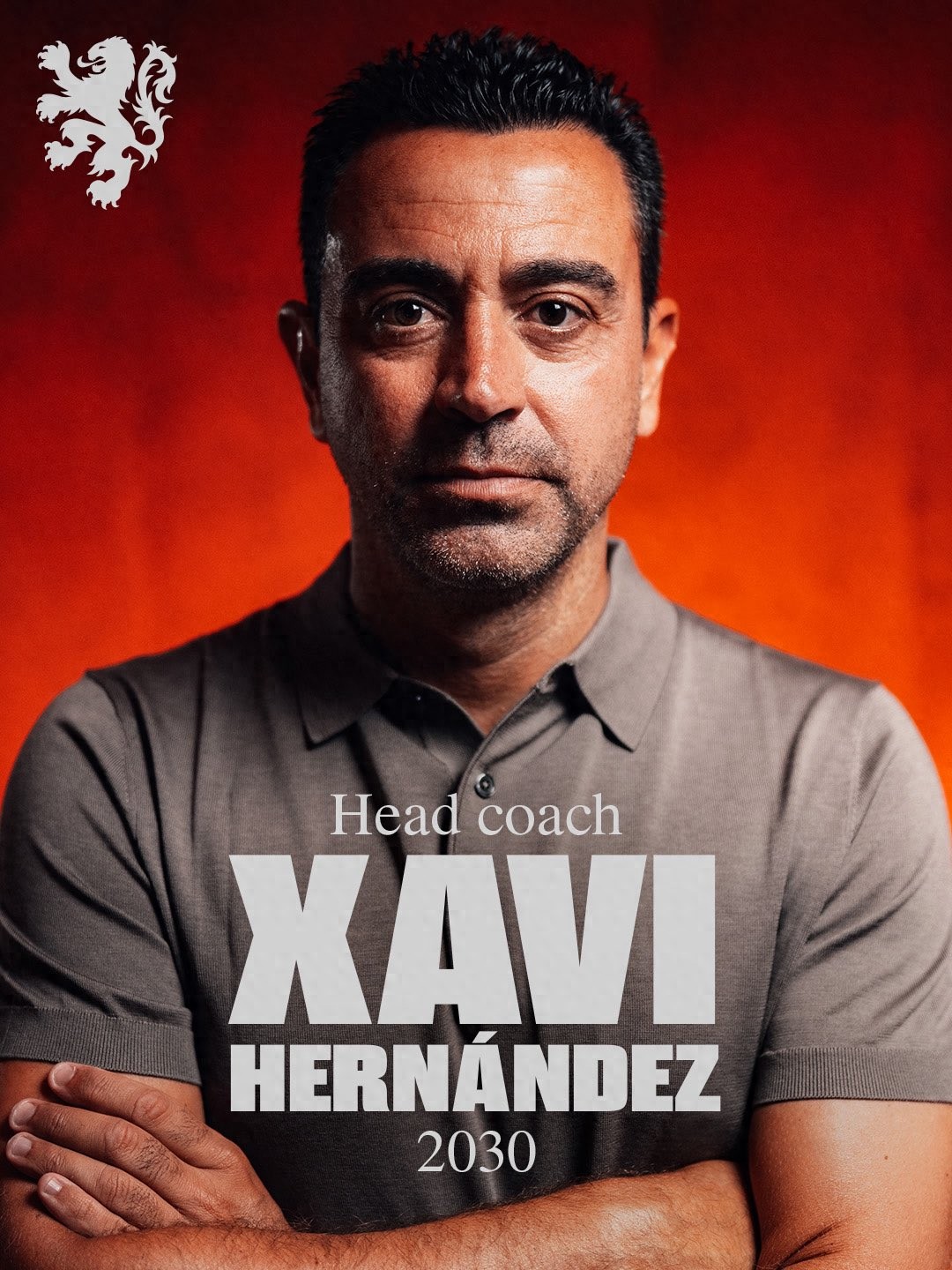
On August 13, Beijing time, a significant official announcement was made in the football world: Xavi Hernandez, the 46-year-old former Barcelona manager, has been appointed as the new head coach of the Netherlands national team, with a contract running until the 2030 World Cup. This is not only Xavi's first coaching role since leaving Barcelona in 2024, but also marks the first time the Dutch team has employed a foreign manager since Ernst Happel in 1978, ending a nearly 50-year gap.
The Dutch Football Association's "game-changing" move stemmed from a painful defeat at this summer's World Cup in the United States, Canada, and Mexico. In the Round of 32, the highly anticipated "Oranje" lost to Morocco in a penalty shootout, exiting the tournament at the first knockout stage. This humiliating elimination led to widespread criticism of then-coach Ronald Koeman, who eventually resigned. Faced with this "hot potato," the Dutch FA, after being turned down by local top coaches like Arne Slot and Erik ten Hag, ultimately set their sights on the unemployed Xavi.
Xavi's appointment quickly resonated strongly with fans, who exclaimed, "Barcelona and the Netherlands have always had a connection." This bond stems from the greatest ideological inheritance in football history. In his inaugural speech, Xavi emotionally stated that as a product of La Masia, he was deeply influenced by Dutch football legends such as Johan Cruyff and Rinus Michels, claiming to "have Dutch football running through his veins." From Cruyff's total football to Xavi's perfection of possession-based football at Barcelona, the Dutch football philosophy has long been deeply imprinted on the Spanish coach's tactical board. Now, with his belief in "possession-based attacking football," he is undoubtedly the best choice to reshape the Dutch team's tactical system.
Meanwhile, Xavi's coaching of the Netherlands has sparked widespread discussion about the phenomenon of "football powerhouses hiring foreign head coaches." Once upon a time, traditional giants like England and Brazil had an almost stubborn insistence on native coaches, but now, as modern football tactics become increasingly complex, these football powerhouses are also showing a more open and pragmatic side.
Looking back at the 2026 World Cup in the United States, Canada, and Mexico, England had Thomas Tuchel, Brazil had Carlo Ancelotti, and now the Netherlands has opened its doors to Spaniard Xavi. Behind this "impressive move" lies the hunger of national football associations for top-tier tactical concepts. While local coaches are certainly familiar with the culture and psychology of their players, foreign coaches often bring a broader tactical vision, more advanced data analysis systems, and the courage to break free from traditional thinking.
For Xavi, coaching the Netherlands is a new challenge in his career. He not only has to lead a team with top stars like Virgil van Dijk, Frenkie de Jong, and Cody Gakpo to reclaim glory at the 2028 European Championship and the 2030 World Cup, but also needs to prove that he can step out of Barcelona's shadow and establish his own tactical monument on the international stage.
From the tactical board at Camp Nou to the green fields of Amsterdam, Xavi's "Oranje" journey is destined to be a path full of romanticism and real-world tests. For the football world, this may be the most beautiful example of football culture continuously merging and evolving in the era of globalization.
Watch football on Migu Video!


Wonderfulshortvideo
mbappe news mbappe edit mbappe new shoe boot deal mbappe nike


julian alvarez barcelona news
James Trafford’s big moment in the U21 EURO final 🤯
RODRI BARCELONA transfer barcelona news today rodri to barcelona transfer here we go
gianni infantino and trump drama news
jorge messi death messi news today football news today
jose mourinho netflix documentary pep guardiola mourinho beef mourinho edit
 Links
Links
 Contact